
Early Signs You May Need Laser Scar Treatment in Toronto
Early Signs You May Need Laser Scar Treatment in Toronto
Scars change a lot in the first year or so after an injury or surgery. During that time, they can look red, raised, or uneven, then slowly soften and fade. Paying attention to those early changes can help you decide when it might be time to ask a medical professional about scar treatment in Toronto.
At Sovereign Skin, we often see people who are unsure if what they are seeing is normal healing or something that could become more permanent. Not every scar needs treatment, and there is no single “perfect” result for everyone. Still, some early warning signs can suggest that it is worth meeting with a physician-supervised medical-aesthetic clinic to talk about safe, evidence-informed options like laser scar treatment. This article is for general information only and is not medical advice. A proper assessment with a qualified health professional is always needed before any treatment choice.
Spotting Scar Changes Before They Become Permanent
In the first 3 to 6 months, many scars go through a “loud” phase. They can look red or pink, feel slightly raised, and sometimes feel tight. Over 12 to 18 months, many of these changes calm down. The scar often becomes flatter, paler, and less noticeable.
Some people find it helpful to watch for:
- gradual softening and lightening over time
- less itching and irritation as the months pass
- edges that stay within the original wound line
When these things are happening, it may be a sign of typical healing. When they are not, it does not always mean that something is wrong, but it may be a prompt to ask questions.
Early assessment with a physician-supervised clinic in Toronto can help you understand what kind of scar you have, what is realistic for your skin type, and whether laser scar treatment might play a role in a larger plan. Any plan should respect your overall health, medications, history of scarring, and Canada’s standards of care.
When Normal Healing Starts to Look Concerning
It is normal for a fresh scar to be red, a bit firm, and more noticeable than the surrounding skin in the first few months. What worries many people is when that “early” look does not settle or begins to get worse.
Signs that may deserve medical attention:
- Redness that keeps getting brighter or more intense over several months
- Skin that turns darker or patchy instead of slowly blending in
- A scar that becomes thicker, lumpy, or starts to rise above the skin
- Edges that seem to spread beyond the original cut or injury
- A hard, rope-like band under the scar that keeps growing
Two common types of raised scars are hypertrophic and keloid scars. In simple terms, a hypertrophic scar stays within the borders of the original wound but is thick, raised, and often red. A keloid scar can grow beyond the original area, forming a larger, firm, sometimes itchy mass. These scars can be stubborn, but early assessment by a physician may give you more options, including laser treatments and non-laser therapies.
Before anyone talks about laser-based scar treatment in Toronto, it is important to rule out infection or wound problems. Ongoing redness with warmth, pus, sudden swelling, or increasing pain may point to an infection or another medical issue. Those situations need prompt medical care, not cosmetic treatment.
Changes in Colour, Texture, and Sensation
Colour, texture, and sensation often tell you a lot about how a scar is maturing and whether treatment might be helpful.
Common colour changes that worry people:
- Redness or pink that does not fade over time
- Dark brown or almost black areas that stand out from your natural tone
- Mixed tones, for example, pale in the middle and dark around the edges
- Extra dark patches after a season of sun exposure
Texture is another clue. Some scars become thin and flat, while others go in the opposite direction. You might notice the following:
- Depressed scars, such as acne marks that look like small pits or tunnels
- Thin, sunken lines after surgery or injury
- Thick ridges that catch on clothing or irritate under a bra strap or waistline
- Bumps that get nicked while shaving or catch the arm of your glasses
Sensation matters as well. Itching, burning, tenderness, or tightness that gets in the way of daily comfort is a signal worth listening to, especially when it goes on for months. If you notice that:
- clothing rubbing over the scar is uncomfortable,
- movement pulls or stretches the area, or
- you avoid touching or washing the area because it feels sensitive,
it may be time to let a medical professional take a look.
Laser treatments can sometimes help with redness and texture, especially when they are used as part of a broader plan, but they are not a cure-all. Results vary from person to person, and it is important to discuss realistic goals with the treating physician.
Daily Life Clues You Should Not Ignore
Not all scars are only a cosmetic concern. Some affect the way that you move, dress, or feel in social situations. Those daily life clues are just as important as what the scar looks like in the mirror.
Functional signs that may justify an evaluation include:
- a scar across a joint that makes bending or straightening harder
- tightness around the mouth, eyelids, or neck that affects expression or vision
- discomfort with simple actions like walking, stretching, or lifting at work
Emotional and social impacts can be more subtle but just as real. People often notice these changes more as Toronto’s weather warms up and lighter clothing comes out. You may catch yourself:
- choosing higher necklines to hide a neck or chest scar
- wearing long sleeves in situations where you would rather not
- adding heavier makeup or concealer to cover facial or hand scars
- saying no to sports, swimming, or social events because of how a scar looks
If a scar is affecting your quality of life, that alone is a reason to consider a medical consultation. A thoughtful assessment can include both laser and non-laser options and should respect your comfort level and personal goals.
How Laser Scar Treatment Fits Into Your Options
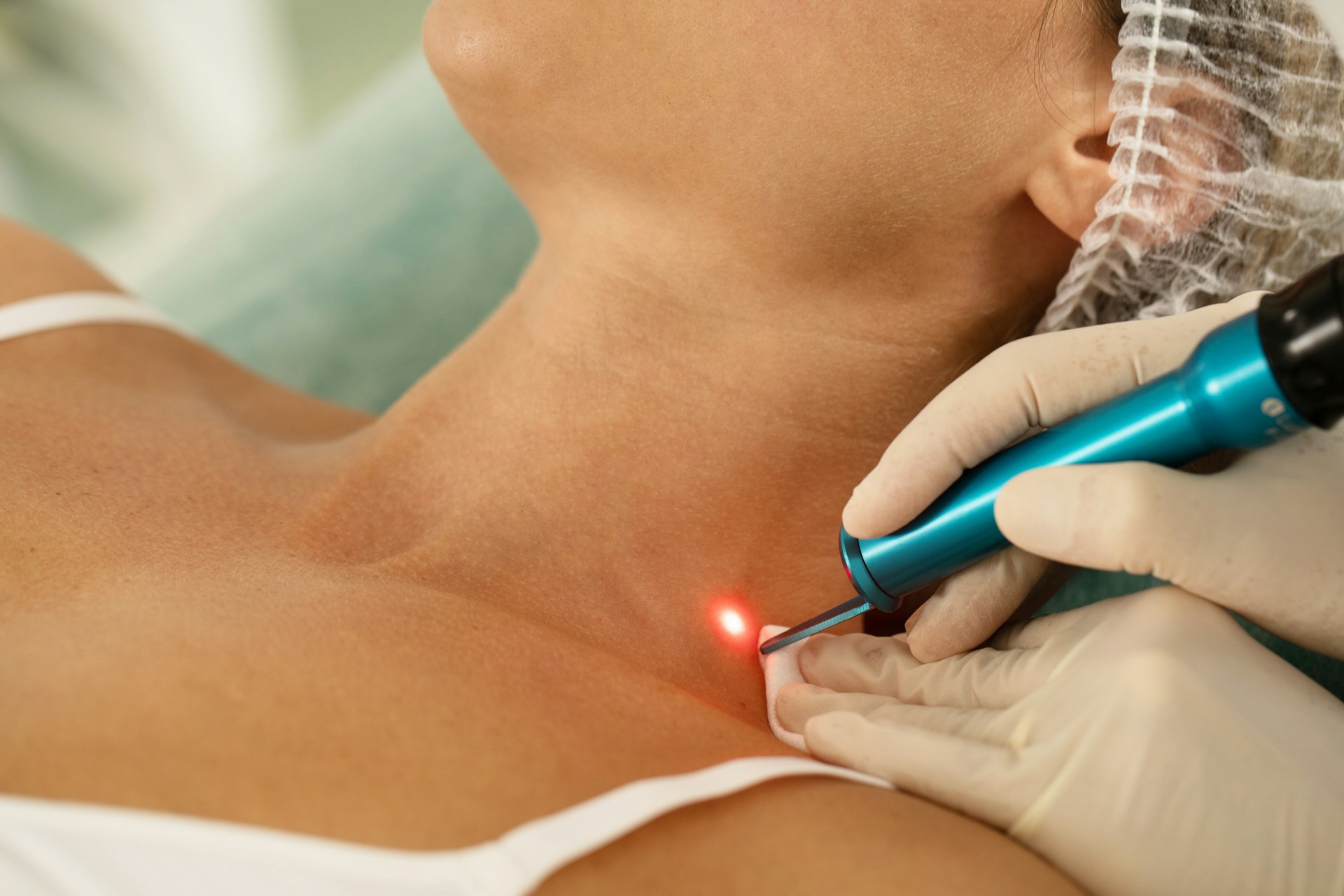
Laser scar treatment in Toronto is one possible tool, not the only answer. It is not suitable for everyone and is not always necessary, even when a scar is noticeable.
A physician will usually start by:
- reviewing your medical history, medications, and any past issues with scars
- examining the type, age, location, and behaviour of the scar
- considering your skin tone and how it responds to sun or past treatments
- talking about what result you are hoping for and what is realistic
Depending on your situation, other therapies may be discussed, such as silicone gel or sheets, prescription creams, microneedling, certain injectable treatments, or surgical revision. Any intervention should follow Canada regulations and the guidelines of the College of Physicians and Surgeons of Ontario (CPSO), with clear information about risks and possible benefits.
No matter which treatment path is chosen, sun protection plays a big role. Scar tissue can react strongly to UV exposure and may darken more than the surrounding skin. Using broad sun protection when outdoors, especially from spring into late summer, can support healing and help any cosmetic treatment result look its best over time.
Planning Your Next Step with a Trusted Clinic
If you are noticing early warning signs, or if a scar is starting to affect your movement or confidence, it may be time to plan a thoughtful next step. Meeting with a physician-supervised clinic in Toronto can help you sort out what is normal, what might change on its own, and when treatments like laser might make sense.
During a consultation, it can be helpful to ask:
- Which treatment options are recommended for my specific scar? Why?
- What improvements are realistic? What will likely not change?
- What are the possible risks, side effects, and aftercare steps?
- How much recovery time could I need? How many sessions might be suggested?
- How will the plan work with my lifestyle, travel, and sun exposure?
At Sovereign Skin, we follow Canada’s regulations and CPSO guidelines and focus on individualized care. We do not guarantee results or pressure anyone into treatment. Our goal is to give you clear information so you can make choices that feel right for you, your health, and your day-to-day life in Toronto.
Reveal Smoother, More Confident Skin with Expert Care
If you are ready to address scarring with a personalized, clinically guided approach, we invite you to explore our advanced options for scar treatment in Toronto. At Sovereign Skin, we carefully assess your skin and goals so we can recommend treatments tailored to your specific scars and skin type. Book a consultation today or contact us with your questions so we can help you take the next step toward clearer, more even-looking skin.

Aesthetic Team
Sovereign Skin
Articles on the Sovereign Skin blog are written and medically reviewed by licensed aesthetic professionals with hands-on clinical experience in cosmetic injectables and skin treatments. Our team follows current medical guidelines and evidence-based practices to ensure accurate, trustworthy information that helps readers make informed decisions about aesthetic care.
